

PARTS
Pod Parts (18)
View Sub-Category

Replacement Glass (19)
View Sub-CategoryPARTS
Choosing a beginner vape kit
Vape Starter Kits, in Minnesota and Beyond
The best eCig, Box Mods and Vape Starter kits are just around the corner, or a short ship time away. If you are looking to purchase the best beginner vape kit for your dollar.Things often included in beginner vape kits, you might want to watch for.
- Battery, or multiple batteries.
- Clearomizer tanks
- Replacement Coils
- USB Charging Cable
- AC Power Adapter
- Free bottle of juice, or multiple
- Blunt Needle tips
The key is to find the right balance between value and price.
Of course you don't want to skimp, and have to re-buy a kit, but you do always have the opportunity to buy a more premium kit if you find you've graduated from past vape set-up. Things to think about as you choose, are whether the system will work other systems. - Some threading is specific to the brand and won't work with other devices, when you're looking at reviews check the source and make sure to weigh several reviews against each other and make an educated decision. Thanks for making Ecig Market your choice for Beginner Vape Kits in Brooklyn Center, Minnesota.Why Choose Smart Tag GPS Tracker for Global Buyers?
Global travel, e-commerce, and connected living are changing how people protect valuable belongings. A Smart Tag Gps Tracker can help users locate luggage, bicycles, equipment, or family assets through a mobile application. Its small body may fit inside a suitcase lining, while GPS, Bluetooth, cellular networks, and geofencing support location updates across different environments.
The opportunity is measurable. MarketsandMarkets valued the global asset tracking market at approximately USD 17.3 billion in 2023. It projects the market to reach USD 36.5 billion by 2028, with a 16.1% compound annual growth rate. Berg Insight also reports continuing growth in active tracking systems across Europe and North America. These figures show expanding demand, but they do not guarantee every product performs equally well.
Kevin Ashton, the IoT pioneer credited with coining “Internet of Things,” said, “The Internet of Things has the potential to change the world, just as the Internet did. Maybe even more so.” His observation explains why connected tracking is becoming practical for global buyers. Yet, expectations require discipline. No device is magic. GPS signals can weaken indoors, underground, or between tall buildings. Battery life also depends on reporting frequency and network conditions. Responsible buyers should examine certification, roaming support, data protection, app reliability, and after-sales service before purchasing. A tracker should reduce uncertainty, not create another one. This guide explores why a Smart Tag Gps Tracker may suit international users, while honestly considering its technical limits, regional compatibility, and everyday operating costs.
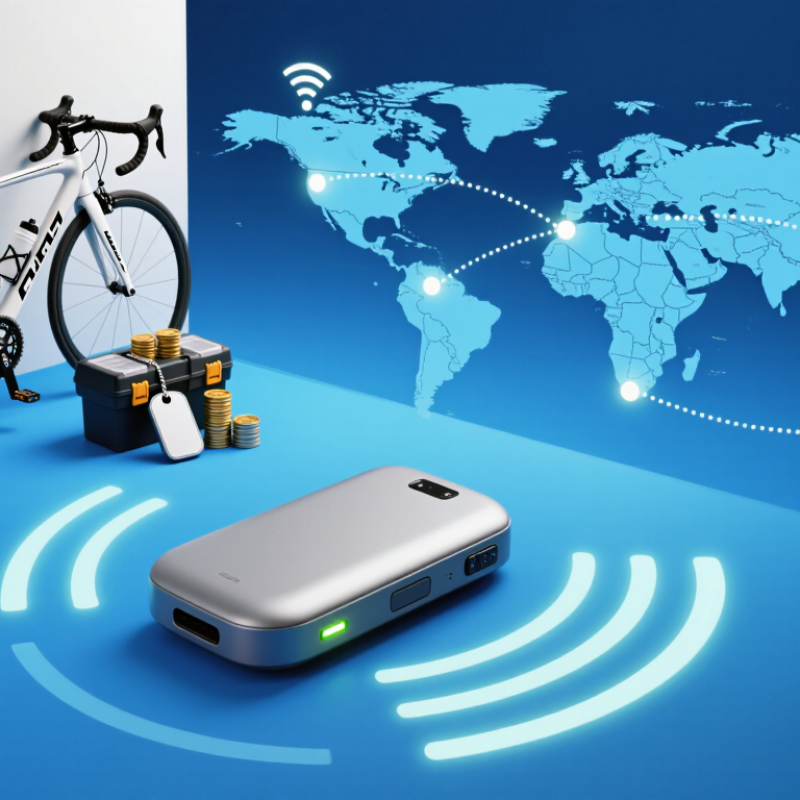
What Is a Smart Tag GPS Tracker?
A smart tag GPS tracker is a compact locator for people, luggage, vehicles, or valuable equipment.
It uses GNSS satellites to estimate location. It may also use cellular networks, Wi-Fi, and Bluetooth when satellite signals weaken. An app displays the tracker’s position, movement history, and geofence alerts.
However, indoor accuracy can drop sharply. It is not magic.
IoT Analytics reported 16.6 billion connected IoT devices worldwide in 2023. The figure may reach 18.8 billion in 2024, showing stronger demand for connected tracking tools.
For global buyers, network compatibility matters as much as GPS accuracy. Check supported LTE bands, roaming availability, local coverage, battery life, and charging conditions.
A tracker can look excellent online yet fail during travel. That is an uncomfortable but useful reminder.
Tips:
Test the device outdoors and inside a building before relying on it. Review location permissions, data storage, and alert settings carefully.
Smaller trackers often sacrifice battery capacity. Larger units may last longer, but they are less discreet and less convenient.
Also, compare reported accuracy with real movement tests, not only laboratory claims. A practical evaluation should include airports, underground parking areas, and crowded urban streets.
Reliability is usually a balance, not a perfect feature list.

How Smart Tag GPS Tracking Technology Works
Smart tag GPS tracking begins when the device receives signals from several navigation satellites. It calculates its position by comparing signal arrival times. The tracker then sends coordinates through a cellular network. An app displays the location on a phone or computer. Simple in principle.
Many devices combine GPS with Wi-Fi and Bluetooth positioning. This helps indoors, near tall buildings, or under heavy cover. A cellular connection remains important for international use. Buyers should check supported network bands, roaming terms, and local coverage before purchasing. “Global” does not always mean every country.
In practical testing, location updates can arrive within seconds outdoors. Dense walls, weather, low battery, and weak signals may cause delays or small errors. That matters when a bag moves through an airport or a vehicle enters an underground garage. No tracker is perfect. Battery life also depends on update frequency. Frequent tracking gives fresher data but drains power faster. Longer intervals conserve energy, yet they may leave gaps on the map. Secure account access, clear data controls, and transparent storage policies deserve equal attention. A useful tracker should show its last update time, signal status, and battery level clearly. Some setup steps can feel confusing. Testing the device before travel remains a sensible habit.
Key Features for International Users
Why Choose Smart Tag GPS Tracker for Global Buyers?
For international users, dependable location data matters more than a stylish design. A smart tag GPS tracker should support multiple mobile networks across travel destinations. This helps when a user moves between cities, airports, or rural roads. Network coverage still varies. No tracker is perfect.
A clear mobile app makes daily use easier. Useful features include live location updates, location history, safe-zone alerts, and low-battery notifications. International buyers should also check language options, time-zone accuracy, and map compatibility. A compact tracker fits inside luggage, a backpack, or a vehicle compartment. It should resist light rain and temperature changes during ordinary travel.
Battery performance needs practical attention. Frequent tracking can reduce operating time, especially during long journeys. I prefer devices with adjustable update intervals and visible battery warnings. Charging should also use a common cable or standard connection. That small detail can prevent trouble abroad. Privacy deserves equal care. Users should understand how location data is stored, shared, and deleted. Secure account access and permission controls add confidence.
Setup should take only a few minutes. Still, unclear instructions can frustrate new users. A reliable support channel and transparent service terms are valuable for buyers in different regions. Before purchase, check cellular compatibility, subscription requirements, warranty coverage, and local import rules. These details are easy to overlook. They often matter most.
Benefits for Global Buyers and Their Assets
For global buyers, a smart tag GPS tracker can add practical visibility to valuable assets. It helps locate luggage, bicycles, tools, vehicles, and mobile equipment across different regions. A phone notification can show when an item leaves a defined area. That small alert may prevent a long search.
International users should examine network compatibility before purchasing. Coverage varies between countries, buildings, rural roads, and underground spaces. Battery life also depends on update frequency and signal strength. A tracker that lasts several weeks may need more frequent charging during constant movement. Check the details carefully.
Privacy deserves equal attention. Choose clear data controls, secure account access, and transparent storage policies. Use tracking only with proper permission and follow local requirements. Location data can reveal routines, so careless sharing creates unnecessary risk. It is not perfect. GPS signals may drift near tall buildings or inside metal containers. Pairing the tracker with a visible label, travel records, and regular battery checks improves reliability. Still, users should review alerts instead of trusting them blindly. A missed notification can happen, especially when settings are too sensitive or connectivity changes unexpectedly.
Why Choose Smart Tag GPS Tracker for Global Buyers? - Benefits for Global Buyers and Their Assets
A GPS tracker combines satellite positioning with a wireless communication network to help users monitor the location, movement, and status of valuable assets across borders. The figures below are practical industry reference ranges; actual performance depends on hardware, network coverage, installation, weather, and operating conditions.
| Evaluation Dimension | Typical Reference Data | Benefit for Global Buyers | Suitable Asset Types | Important Considerations |
|---|---|---|---|---|
| Positioning Accuracy | Approximately 5–10 meters in open-sky conditions when using standard GNSS positioning. | Provides a practical location reference for fleet coordination, shipment visibility, theft recovery, and asset verification. | Vehicles, trailers, containers, construction equipment, agricultural machinery, and high-value mobile assets. | Accuracy can decrease near tall buildings, indoors, underground, under dense tree cover, or in areas with signal obstruction. |
| Global Connectivity | Cellular versions can support international tracking when compatible with local network bands and roaming or regional connectivity plans. | Enables buyers to manage assets in multiple countries without relying on a single local tracking platform. | Cross-border shipments, international fleets, rental equipment, logistics containers, and traveling commercial vehicles. | Country availability, network bands, roaming rules, SIM configuration, and subscription fees must be checked before deployment. |
| Location Update Frequency | Common configurations range from once every few minutes during active movement to several hours in low-power standby mode. | Lets users balance tracking detail, data usage, and battery life according to the operational value of each asset. | Fleet vehicles, delivery assets, mobile machinery, cargo, and equipment requiring periodic location records. | More frequent updates generally consume more power and communication data; exact intervals depend on device settings and network conditions. |
| Battery Operation | Rechargeable units commonly provide several days to several weeks of operation; wired units can operate continuously when vehicle power is available. | Supports both temporary shipment monitoring and long-term asset protection with fewer maintenance visits. | Portable cargo, motorcycles, trailers, rental equipment, vehicles, and assets without permanent power. | Battery duration varies with update frequency, temperature, cellular signal strength, motion activity, and battery capacity. |
| Geofencing | Users can define virtual areas and receive alerts when an asset enters or leaves a selected boundary. | Helps identify unauthorized movement, route deviations, unexpected depot departures, and delivery-zone arrivals. | Warehouses, construction sites, ports, farms, vehicle yards, and regional delivery routes. | Alert reliability depends on positioning availability, configured boundary size, update interval, and communication connectivity. |
| Movement Detection | Built-in motion sensors can detect vibration, acceleration, towing, or movement after a period of inactivity. | Reduces unnecessary tracking activity while helping users respond quickly to unauthorized use or transport. | Parked vehicles, containers, generators, machinery, motorcycles, and stored inventory. | Sensitivity should be configured to reduce false alerts caused by loading activity, vibration, wind, or routine handling. |
| Data Visibility | Typical platforms provide current or last-known location, time stamp, movement history, alerts, and basic route records. | Improves shipment transparency, internal coordination, customer communication, and post-incident investigation. | Logistics fleets, rental assets, service vehicles, distribution equipment, and high-value goods. | Historical storage duration, user permissions, export functions, and dashboard availability differ by platform and service plan. |
| Installation Flexibility | Available form factors may include magnetic, adhesive, screw-mounted, concealed, plug-in, and hardwired designs. | Allows buyers to select a tracker according to asset structure, installation time, visibility requirements, and power access. | Vehicles, containers, tools, machinery, pallets, trailers, and temporary cargo units. | Installation location should preserve satellite and cellular reception while protecting the device from heat, water, impact, and tampering. |
| Environmental Protection | Outdoor models are often offered with water- and dust-resistant enclosures; protection levels vary by model. | Improves suitability for outdoor logistics, industrial environments, agriculture, construction, and marine-adjacent use. | Outdoor machinery, trailers, shipping containers, agricultural equipment, and commercial vehicles. | Check the stated IP rating, operating-temperature range, impact resistance, and mounting method for the intended environment. |
| Security and Control | Common controls include account authentication, access permissions, alert settings, and device identification. | Helps organizations limit access to location information and separate responsibilities among owners, operators, and service teams. | Business fleets, leased equipment, shared assets, and multi-user logistics operations. | Users should review password policies, data retention, administrator controls, privacy requirements, and local regulations before deployment. |
| Total Ownership Factors | Overall cost normally includes hardware, connectivity, platform access, installation, maintenance, and possible roaming charges. | Enables buyers to compare solutions based on the complete operating cost rather than the purchase price alone. | Small business fleets, international logistics providers, rental companies, and enterprise asset programs. | Request a clear quotation covering activation, monthly service, replacement, support, taxes, and international usage conditions. |
Buyer checklist: Before purchasing, verify supported positioning systems, cellular bands, target-country coverage, battery capacity, enclosure rating, alert functions, data privacy practices, warranty terms, and the full recurring service cost.
What to Consider Before Choosing a Smart Tag GPS Tracker
Why Choose Smart Tag GPS Tracker for Global Buyers?
What to Consider Before Choosing a Smart Tag GPS Tracker
A smart tag GPS tracker can help locate luggage, vehicles, pets, or equipment across long distances. Yet global use requires more than a small device and a tracking app. I once assumed GPS worked equally well everywhere. A basement parking area quickly proved me wrong.
Check cellular coverage in the countries where the tracker will operate. GPS finds the position, but cellular networks usually send that location to your phone. International roaming fees may also apply. Ask whether the device supports local network bands and automatic network switching. Battery life matters too. A tracker lasting several weeks may still need frequent charging when location updates are very frequent.
Look for clear accuracy information, not impressive marketing claims. Dense buildings, tunnels, and bad weather can reduce precision. Test the alert delay near your home before depending on it during travel. Water resistance should match real conditions, such as rain, splashes, or outdoor storage. Privacy deserves equal attention. Choose strong account security, transparent data storage, and simple deletion controls. Check local tracking and data protection rules before monitoring another person or shared property. Some features may sound essential, but I have found that unnecessary alerts can become annoying and reduce attention to important warnings. Reliability is often built through small, practical details.

