
PARTS

  • Pod Parts

    Pod Parts (18)

    View Sub-Category
  • Replacement Glass

    Replacement Glass (19)

    View Sub-Category
  • PARTS

      PARTS

    • Pod Parts

      Pod Parts (18)

      View Sub-Category
    • Replacement Glass

      Replacement Glass (19)

      View Sub-Category

    Choosing a beginner vape kit

    Vape Starter Kits, in Minnesota and Beyond

    The best eCig, Box Mods and Vape Starter kits are just around the corner, or a short ship time away. If you are looking to purchase the best beginner vape kit for your dollar.

    Things often included in beginner vape kits, you might want to watch for.

    • Battery, or multiple batteries.
    • Clearomizer tanks
    • Replacement Coils
    • USB Charging Cable
    • AC Power Adapter
    • Free bottle of juice, or multiple
    • Blunt Needle tips
    Other things that might happen to be in a kit, will depend on the kind of device it's focusing on. Variable voltage devices, and more Intermediate starter kits, Sub-Ohm Kits may come with more serious attachments and add-ons.

    The key is to find the right balance between value and price.

    Of course you don't want to skimp, and have to re-buy a kit, but you do always have the opportunity to buy a more premium kit if you find you've graduated from past vape set-up. Things to think about as you choose, are whether the system will work other systems. - Some threading is specific to the brand and won't work with other devices, when you're looking at reviews check the source and make sure to weigh several reviews against each other and make an educated decision. Thanks for making Ecig Market your choice for Beginner Vape Kits in Brooklyn Center, Minnesota.

    Why Choose a Red Light Therapy Spa for Your Business?

    The case for opening a Red Light Therapy Spa is becoming more practical, but enthusiasm should not replace evidence. The Global Wellness Institute valued the global wellness economy at $6.3 trillion in 2023. It projects growth toward $9 trillion by 2028. Meanwhile, the International Spa Association reported approximately $21.1 billion in U.S. spa revenue during 2023. These figures suggest strong consumer interest in wellness services, not guaranteed profitability.

    The science deserves equal attention. Red and near-infrared light are commonly studied under photobiomodulation. Michael R. Hamblin, a leading photobiomodulation researcher, describes it as “the use of light, usually red or near-infrared, to stimulate healing, relieve pain, and reduce inflammation.” His work supports careful education rather than exaggerated promises. A spa owner must understand wavelength selection, exposure time, eye protection, equipment maintenance, and client screening. Small details matter. A clean treatment room, visible safety instructions, and documented protocols can shape customer trust.

    Still, the business model has limits. Evidence varies by condition, device, and treatment schedule. Results may differ between clients. That reality should appear in staff training and marketing language. A successful Red Light Therapy Spa may combine qualified practitioners, transparent consultations, and measurable service standards. It should also track repeat visits, customer feedback, and operating costs. The opportunity is real, but imperfect. Industry growth alone cannot prove demand in a specific neighborhood. Careful testing, responsible claims, and ongoing professional education remain essential before investing heavily.
    Why Choose a Red Light Therapy Spa for Your Business?

    What Is a Red Light Therapy Spa?

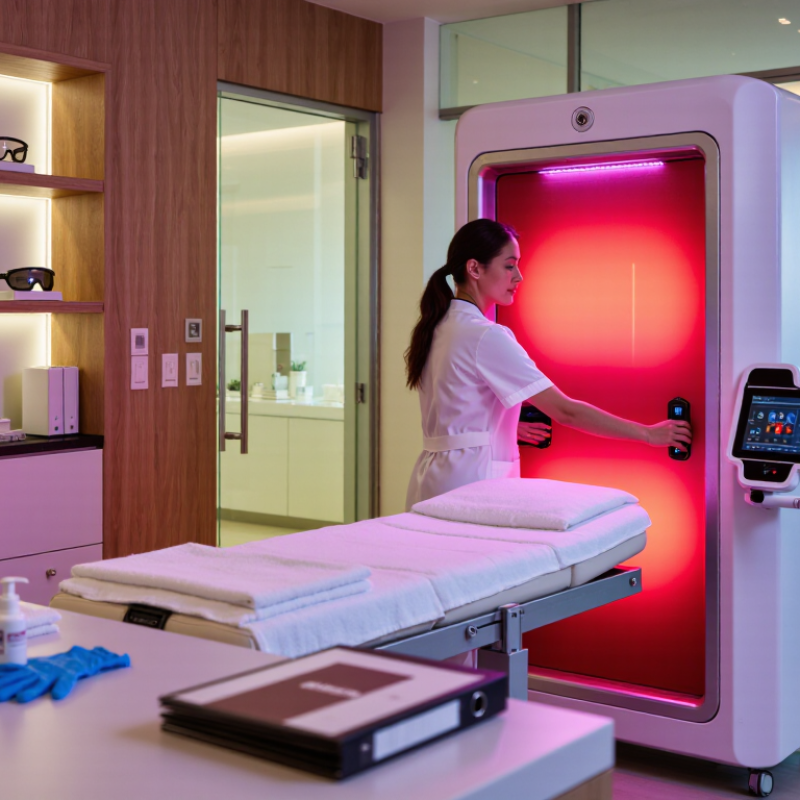
    A red light therapy spa is a wellness space offering controlled exposure to red and near-infrared light. Panels, beds, or compact devices direct low-intensity wavelengths onto the skin. The goal is photobiomodulation, a process studied for supporting cellular energy, circulation, and recovery. Sessions usually feel warm, quiet, and noninvasive. Many clients simply relax under soft red light for several minutes.

    The concept has commercial momentum. The Global Wellness Institute’s 2024 Global Wellness Economy Monitor valued the worldwide wellness economy at about $6.3 trillion in 2023. It projects growth toward $9 trillion by 2028. That figure does not prove red light therapy works. It shows rising interest in structured wellness experiences. Evidence remains uneven across skin, pain, and recovery applications. A responsible spa should explain this clearly. Do not promise disease treatment or guaranteed results. The model is not flawless. Client expectations can be.

    Tips: Choose devices with documented wavelengths, measured irradiance, treatment timers, and clear safety instructions. Record sessions and client feedback. Train staff to ask about photosensitizing medicines, eye sensitivity, and relevant medical conditions. Encourage professional medical advice when concerns appear.

    For a business, the experience matters as much as the equipment. A clean room, adjustable timing, privacy, and consistent protocols build trust. Keep claims modest and measurable. Track repeat visits, comfort ratings, and reported outcomes without overstating them. Industry reports can support demand planning, but they cannot replace clinical judgment.

    How Red Light Therapy Spas Work

    How Red Light Therapy Spas Work

    A red light therapy spa uses low-intensity red and near-infrared LEDs. Red light commonly ranges from 620 to 700 nanometers. Near-infrared light reaches deeper tissue. Cells absorb these photons through mitochondrial pathways, especially cytochrome c oxidase. This may support ATP production and cellular signaling. The process is non-invasive and should not feel painful. Most clients experience gentle warmth, or almost nothing.

    The Global Wellness Institute reported that the wellness economy reached 6.3 trillion dollars in 2023. Its report projects continued growth through 2028. This wider trend creates commercial interest in light-based services. However, demand is not proof of clinical effectiveness. A 2023 systematic review in Photobiomodulation, Photomedicine, and Laser Surgery found promising results across several applications, but protocols varied widely. Wavelength, dose, distance, and session frequency all matter. The evidence is promising, not magical. A responsible spa should avoid guaranteed claims.

    Tips: Train staff to explain realistic outcomes. Use documented treatment protocols and inspect equipment regularly. Provide protective eyewear when appropriate. Record session time, distance, and client feedback. Screen for photosensitive conditions and relevant medications. Refer medical concerns to qualified clinicians. Clean contact surfaces between sessions. Small details build trust. One weakness remains: many studies use different devices and small participant groups. Spa owners should review new evidence instead of treating every result as settled.

    Why Choose a Red Light Therapy Spa for Your Business?

    Red light therapy spas use red and near-infrared LED light to deliver selected wavelengths to the skin. The chart compares photon energy at wavelengths commonly used in light-therapy equipment. Photon energy is calculated using the physical relationship E = 1240 ÷ λ, where wavelength is measured in nanometers.

    Longer wavelengths carry less energy per photon but can travel farther through tissue. Actual treatment outcomes depend on irradiance, exposure time, treatment distance, wavelength combination, and individual factors.

    Business Benefits of Adding Red Light Therapy Services

    Why Choose a Red Light Therapy Spa for Your Business?
    Business Benefits of Adding Red Light Therapy Services

    Adding red light therapy can create a new revenue stream without requiring a large treatment room. Sessions often use compact equipment, simple setup procedures, and scheduled appointment blocks. This can help businesses use quiet hours more effectively. Clients may also add short sessions before or after existing wellness services. That convenience supports repeat visits.

    Professional presentation matters. Staff should explain the process, screen for relevant concerns, and follow the equipment manufacturer’s instructions. Clear consent forms, protective eyewear, cleaning routines, and accurate session records build trust. Staff training also reduces inconsistent service. Small details matter.

    Client expectations require careful handling. Red light therapy is not a guaranteed solution, and research differs across specific goals. Results can vary with skin type, routine, device settings, and session frequency. Businesses should avoid promising medical outcomes. A qualified healthcare professional may be appropriate when clients report symptoms or use photosensitizing medication. That boundary protects clients and the business.

    The investment is not automatically profitable. Equipment costs, staff time, maintenance, insurance, and local requirements need review. A practical pilot can test demand before expanding. Track bookings, repeat visits, client feedback, and operational problems. Some clients may not return. That is useful information. Adjust the service based on evidence, not enthusiasm alone.

    Key Equipment, Space, and Staffing Requirements

    Why Choose a Red Light Therapy Spa for Your Business?

    Key Equipment, Space, and Staffing Requirements

    A red light therapy spa needs more than attractive lighting and treatment beds. Choose certified light therapy equipment with adjustable intensity, reliable timers, protective features, and clear maintenance instructions. Keep service records for every unit. They help staff identify performance changes before clients notice them. Equipment should sit on stable surfaces, with cables secured away from walking paths. A bright room is not always a better room.

    Space planning affects safety and client comfort. Each treatment area needs enough clearance for movement, cleaning, and emergency access. Use washable surfaces and provide a private changing area when clients may remove outer clothing. Ventilation matters, even when the equipment produces limited heat. A reception desk, storage cabinet, handwashing station, and accessible restroom also support smoother operations. I have seen businesses underestimate storage space. Supplies quickly crowd a room.

    Tips: Train staff on equipment settings, eye protection, cleaning procedures, and client screening. Keep written protocols near each station. Staff should explain that light therapy is not a guaranteed treatment for every concern. They should ask about photosensitive conditions, medications, pregnancy, and recent procedures, then recommend medical advice when appropriate. Check local business, electrical, sanitation, and accessibility requirements before opening. Staffing plans should include setup time, equipment checks, client education, and incident reporting. A lean schedule may look efficient, but rushed sessions create avoidable mistakes. Review your process after the first month. Some weaknesses only appear during busy hours.

    How to Evaluate a Red Light Therapy Spa Investment

    Why Choose a Red Light Therapy Spa for Your Business?

    How to Evaluate a Red Light Therapy Spa Investment

    A red light therapy spa can add a focused service to a wellness business. However, attractive equipment does not guarantee strong returns. The Global Wellness Institute reported that the global wellness economy reached $5.6 trillion in 2022. Its 2024 monitor projects continued expansion through 2027. Demand looks promising, but local customer behavior matters more than global headlines.

    Evaluate the investment through utilization, pricing, and operating costs. Ask how many paid sessions the equipment needs each week. Include rent, electricity, cleaning, maintenance, staff training, insurance, and payment fees. Grand View Research reported continued growth in the global red light therapy market, but market growth is not the same as guaranteed occupancy. A spreadsheet can look convincing and still lie. Test the service with a limited pilot, then measure repeat visits, cancellations, customer acquisition cost, and revenue per room.

    Tips: Check wavelength ranges, irradiance testing, treatment timing, and safety documentation. Request independent performance records, not only sales claims. Train staff to explain realistic outcomes and possible limitations. Screen clients carefully, document consent, and avoid promising medical results. Professional guidance from dermatology and photobiomodulation literature can improve your operating standards. Still, evidence quality varies by condition, device, and protocol. That uncertainty deserves a budget line, too.