
PARTS
Pod Parts (18)
View Sub-Category

Replacement Glass (19)
View Sub-CategoryPARTS
Choosing a beginner vape kit
Vape Starter Kits, in Minnesota and Beyond
The best eCig, Box Mods and Vape Starter kits are just around the corner, or a short ship time away. If you are looking to purchase the best beginner vape kit for your dollar.Things often included in beginner vape kits, you might want to watch for.
- Battery, or multiple batteries.
- Clearomizer tanks
- Replacement Coils
- USB Charging Cable
- AC Power Adapter
- Free bottle of juice, or multiple
- Blunt Needle tips
The key is to find the right balance between value and price.
Of course you don't want to skimp, and have to re-buy a kit, but you do always have the opportunity to buy a more premium kit if you find you've graduated from past vape set-up. Things to think about as you choose, are whether the system will work other systems. - Some threading is specific to the brand and won't work with other devices, when you're looking at reviews check the source and make sure to weigh several reviews against each other and make an educated decision. Thanks for making Ecig Market your choice for Beginner Vape Kits in Brooklyn Center, Minnesota.Why Choose Electrical Track Socket for Global Buyers?
Global buyers are rethinking how power reaches changing workplaces, retail interiors, and hospitality spaces. The IEA’s Electricity 2024 report projects global electricity demand will grow by an average of 3.4% annually from 2024 to 2026. That growth increases pressure on electrical systems to become adaptable, efficient, and easier to maintain. Electrical Track Socket solutions address this need by allowing outlets to move along a powered rail. A desk can shift. The power point can follow.
That flexibility has practical value. Facility teams can reposition sockets without opening walls or replacing fixed wiring. Retailers can support changing displays with fewer visible cables. In a hotel room, a track system may place charging access beside a bed, desk, or reading chair. Small details matter.
The International Energy Agency also reports that buildings remain a major source of global energy demand and emissions. Better space planning cannot solve this issue alone, but flexible distribution can support longer-lasting interiors and reduce unnecessary renovation work. The benefit is not automatic. Product quality, electrical loading, grounding, thermal performance, and installation accuracy still determine safety.
Professional buyers should examine test reports, material specifications, warranty terms, and the manufacturer’s quality-control records. Applicable IEC, EN, UL, or local requirements must be confirmed for each destination market. No single certification covers every installation.
This is where many purchasing decisions become less simple. A low price may hide weak contacts or limited compatibility. Experienced suppliers should provide clear ratings, installation guidance, and traceable inspection evidence. With those checks in place, Electrical Track Socket becomes more than a design feature. It becomes a practical infrastructure choice for global projects.
Electrical Track Socket: Definition and Core Operating Principles
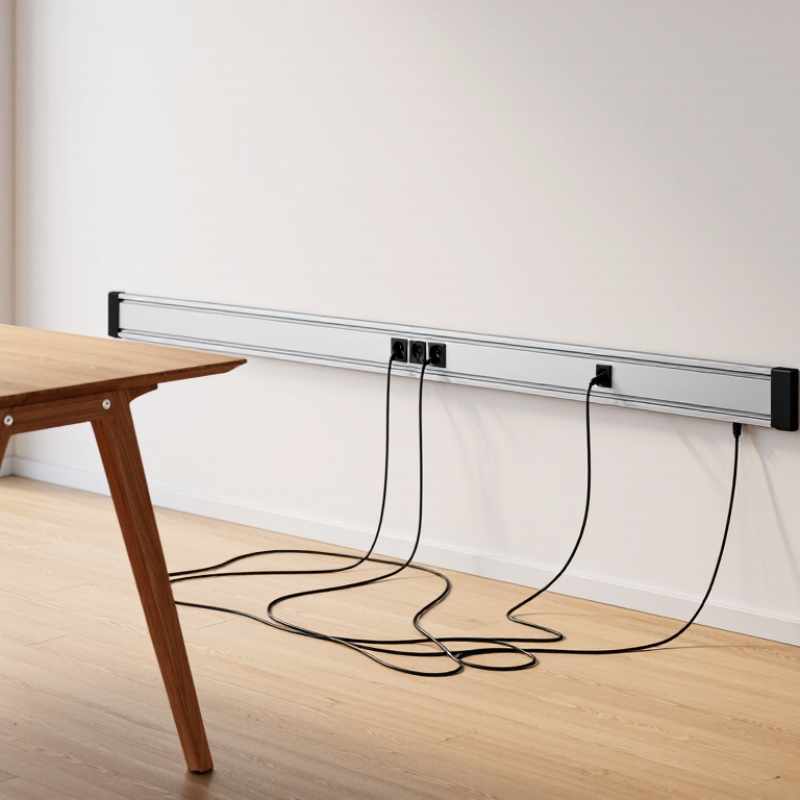
An electrical track socket is a movable power outlet mounted on an energized track. Inside the track, conductive busbars carry electricity along a fixed route. A socket adapter connects through spring contacts or locking pins. Users can reposition outlets without opening walls or adding new cables. This design suits offices, retail spaces, workshops, and flexible residential interiors.
Its core principle is simple: mechanical locking creates stable contact, while insulation separates live conductors from accessible surfaces. A reliable system should include grounding, overload protection, secure polarity, and heat-resistant materials. The International Energy Agency’s Electricity 2024 report expects global electricity demand to grow by an average 3.3% annually from 2024 to 2026. Flexible distribution may help spaces adjust to changing equipment loads. However, convenience does not replace electrical engineering. Track ratings, socket ratings, installation methods, and local voltage requirements must match. IEC 61535 provides requirements for installation couplers, but not every track socket follows the same product scope. That distinction is easy to miss.
Tips: Check rated voltage, current, grounding, and contact temperature before purchasing. Ask for test reports and installation instructions. Inspect the locking action; a loose adapter is not a minor flaw. I have seen specifications appear complete while regional compatibility remained unclear. Buyers should question that gap. A socket can look universal, yet its conductors, certifications, or adapter geometry may limit real-world use.

How Electrical Track Sockets Support Flexible Power Distribution
Why Choose Electrical Track Socket for Global Buyers?
How Electrical Track Sockets Support Flexible Power Distribution
Electrical track sockets create a movable power line along walls, ceilings, counters, and workstations. Users can reposition outlets without opening walls or extending permanent cables. This suits offices, retail spaces, laboratories, and modular production areas. The International Energy Agency’s Electricity 2024 report expects global electricity demand to grow by an average of 3.4% annually through 2026. As equipment loads increase, adaptable distribution can reduce redesign work and support faster space changes.
In practical installations, a track system can power lighting, displays, testing devices, or charging points from one organized route. The socket position changes, but the electrical path remains controlled. IEC 61534 provides requirements for powertrack systems, including construction, testing, and protection. Buyers should still verify rated current, voltage, grounding, temperature limits, and compatibility with local regulations. A flexible system is not automatically a safe system. That assumption needs challenging. Poor load planning may cause overheating or nuisance trips, especially when several high-power devices share one section.
Tips: Map real loads before ordering. Keep continuous loads below the stated rating. Ask for test reports and installation instructions. Check whether accessories lock securely and maintain earth continuity. For dusty or damp areas, review the IP rating carefully. A qualified electrician should inspect connections after installation and whenever the track is modified. Small details matter more than attractive flexibility.
Key Benefits for International Residential and Commercial Projects
Why Choose Electrical Track Socket for Global Buyers?
Key Benefits for International Residential and Commercial Projects
Electrical track sockets give international projects more flexibility than fixed wall outlets. A single track can support several movable sockets, lights, or charging points. This helps homeowners change furniture layouts without opening walls. In offices, outlets can follow shared desks, meeting tables, and temporary workstations. Practical installation experience shows that this adaptability reduces future disruption.
The system also supports cleaner space planning. Designers can place power near kitchen counters, display areas, reception desks, or bedside tables. Commercial users may reduce extension cables across busy floors. However, flexibility must not replace careful load planning. Each project needs verified voltage, current, grounding, and maximum-load requirements. Local electricians should check national codes before installation. Test reports, material information, and clear instructions improve purchasing confidence.
For international buyers, compatibility is a serious detail. Socket modules should match local plugs and approved protection requirements. Durable housings, secure contacts, and heat-resistant materials matter in daily use. Easy replacement can reduce maintenance time, especially in hotels and retail spaces. It is not perfect. Dust, poor installation, or overloaded modules can still create problems. Buyers should request independent testing evidence and after-sales support before ordering. A low price may become expensive when replacement parts or technical guidance are unavailable. Careful comparison remains necessary.
Safety, Compatibility, and Installation Factors for Global Buyers
Why Choose Electrical Track Socket for Global Buyers?
For global buyers, safety begins with the electrical track socket’s rated voltage, current, and grounding design. A polished appearance proves very little. The internal contacts must remain stable during repeated socket movement. Look for clear markings, secure insulation, and protection against accidental touch. Experienced installers also check the circuit capacity before adding several appliances. Overloading a flexible track can create heat behind the wall.
Compatibility requires more than matching a plug shape. Confirm local voltage, frequency, earthing method, and socket accessories before ordering. A track may accept familiar plugs but still lack suitable electrical protection. Regional installation practices can differ sharply. Ask for complete technical drawings and test documentation. Do not rely only on online pictures. That shortcut causes expensive mistakes.
Installation quality affects long-term safety. The mounting surface should be flat, firm, and free from moisture. Power must be isolated before any wiring work begins. A qualified electrician should verify conductor size, terminal tightness, polarity, and earth continuity. Leave enough clearance around moving socket modules. Small details matter. A neat track can still conceal a loose connection. I would also inspect it after several weeks of use, because early movement or heat may reveal problems missed during installation.
| Evaluation Dimension | Reference Data / Common Requirement | Why It Matters to Global Buyers | Recommended Verification Before Purchase |
|---|---|---|---|
| Rated Voltage | 100–127 V220–240 V Actual supply voltage varies by country and building. | A socket designed for one voltage range may be unsafe or unsuitable in another electrical system. Voltage compatibility also affects the permitted load and internal insulation requirements. | Confirm the product voltage marking, destination-country supply voltage, insulation rating, and any required local certification. |
| Rated Frequency | 50 Hz60 Hz Both frequencies are used internationally. | Passive sockets generally connect to either frequency when correctly rated, but integrated switches, electronic controls, and connected appliances may have frequency limitations. | Check the marked frequency range, especially when the track socket includes electronic modules, USB charging, relays, or smart controls. |
| Current Rating | Common products are rated at values such as 10 A13 A16 A, depending on the design and market. | The current rating determines the maximum continuous load. Exceeding it can cause overheating, contact damage, nuisance tripping, or fire risk. | Compare the socket rating with the circuit-breaker rating, conductor size, plug type, and the highest expected simultaneous load. |
| Grounding / Earthing | Protective-earth contacts are required for Class I appliances and many metal-bodied products. Double-insulated Class II appliances may not require earth. | Correct grounding provides a fault-current path and supports automatic disconnection of the protective device. A physically compatible plug is not necessarily electrically safe. | Verify the earthing arrangement, continuity through the track and socket module, polarity requirements, and local electrical rules. |
| Plug and Socket Interface | Plug configurations differ by region, including pin size, spacing, shutter design, polarity, and grounding method. | Track systems are not universally interchangeable. A socket module that fits the rail mechanically may still be incompatible electrically or legally. | Confirm the intended plug standard, contact arrangement, mechanical keying, shutter protection, and compatibility with the selected track system. |
| Ingress Protection | IP20 provides protection against solid objects larger than 12.5 mm but no water protection. IP44 adds protection against water splashes from all directions. | Indoor dry areas may use a basic enclosure, while kitchens, workshops, covered outdoor areas, and commercial environments may require additional protection. | Select the IP rating according to the installation location, moisture exposure, cleaning method, and local code. Do not treat IP44 as waterproof or suitable for immersion. |
| Overload and Short-Circuit Protection | A socket itself normally does not replace circuit protection. Protection is usually provided by an appropriately rated fuse, miniature circuit-breaker, or residual-current device where required. | Track sockets can supply multiple movable outlets, so the total connected load must remain within the circuit and track capacity. | Check the upstream protective device, residual-current protection requirements, cable capacity, maximum track length, and total allowable load. |
| Track Mechanical Compatibility | Track profiles, conductor positions, contact spacing, locking mechanisms, and mounting methods vary between systems. | Mechanical fit alone does not confirm safe electrical contact. Incorrect alignment can create loose connections, arcing, overheating, or loss of protective earth. | Use components from the same compatible system or obtain documented compatibility data covering dimensions, contacts, load rating, and locking performance. |
| Installation Method | Typical options include surface mounting, recessed mounting, ceiling mounting, and suspended installation. The method depends on the track design and building structure. | The mounting method affects cable routing, mechanical load, accessibility, heat dissipation, and the ability to inspect or replace modules safely. | Review the installation manual, mounting spacing, fixing substrate, cable-entry direction, strain relief, and required clearance from heat or water sources. |
| Material and Temperature Resistance | Housing and insulating materials should withstand the expected operating temperature and provide adequate resistance to heat, impact, and flame propagation for the application. | High-load operation, enclosed mounting, and commercial use can increase heat buildup and accelerate material ageing. | Request material specifications, temperature limits, glow-wire or flammability information where applicable, and evidence of thermal testing. |
| Product Testing and Certification | Relevant requirements may include national regulations and applicable IEC or regional standards for plugs, socket-outlets, enclosures, wiring accessories, and low-voltage equipment. | Testing confirms more than appearance; it can cover dielectric strength, temperature rise, endurance, mechanical strength, earthing, and protection against electric shock. | Request a current test report or declaration applicable to the exact model, rating, configuration, and destination market. Verify the certification body and scope. |
| Maintenance and Reconfiguration | Track sockets allow outlet positions to be changed without installing a new fixed socket at every location, provided the system is de-energized and designed for repositioning. | Reconfigurability can reduce renovation time and support changing layouts in offices, retail spaces, hospitality areas, and workshops. | Confirm the approved removal procedure, module locking method, isolation requirements, spare-part availability, and inspection intervals. |
| Compliance with Local Installation Rules | Electrical installation rules, inspection requirements, approved wiring methods, and permitted socket types vary by jurisdiction. | A product that is technically functional may still be unacceptable for a particular building, occupancy type, or export market. | Have the design reviewed by a qualified local electrician or electrical engineer before installation and obtain any required approval or inspection. |
| Buyer’s decision rule: Select an electrical track socket only after matching the destination voltage and frequency, plug interface, current and load limits, grounding method, environmental rating, track compatibility, installation method, and local compliance requirements. | |||
How to Evaluate Electrical Track Socket Suppliers and Products
Why Choose Electrical Track Socket for Global Buyers?
How to Evaluate Electrical Track Socket Suppliers and Products
Global buyers should evaluate the supplier before comparing prices. Ask for company registration, factory photographs, production capacity, and recent quality records. Request test reports from qualified, independent laboratories. Confirm that documents match the exact model, rating, and production version. A polished certificate means little if the sample differs.
Inspect the electrical track socket closely. Check conductor material, insulation thickness, contact pressure, grounding design, and heat resistance. Confirm rated voltage, current, mechanical strength, and compatibility with the intended track system. Ask how the socket performs after repeated insertion and removal. Test the sample under realistic loads. Small details matter. A loose contact can create heat, noise, or early failure.
Supplier communication also reveals practical reliability. Can the team answer technical questions clearly? Do they provide wiring diagrams, installation instructions, inspection photos, and traceable batch numbers? Review packaging, lead times, spare parts, and warranty terms in writing. I once trusted a low-cost sample that performed well for one week, but its connector loosened during extended testing. That experience changed my process. I now request several samples and repeat tests before placing a larger order. No checklist is perfect. Still, documented evidence, careful inspection, and honest technical discussion reduce avoidable risks across different markets.
Why Choose Electrical Track Socket for Global Buyers?
How to Evaluate Electrical Track Socket Suppliers and Products
Electrical track socket products should be matched to the nominal voltage and frequency of the target market. The chart shows commonly used nominal supply voltages: 120 V in the United States and Canada, 127 V in Mexico, 220–230 V across major Asian, European, and Australian markets, and 100 V in Japan. When comparing suppliers, buyers should also verify rated current, grounding design, insulation, temperature rise, mechanical durability, installation compatibility, and applicable IEC, EN, UL, or local certification requirements.
Reference: Typical national mains voltage conventions summarized from international electrical supply and plug standards. Always confirm the exact requirements for the installation location before purchase.

