
PARTS

  • Pod Parts

    Pod Parts (18)

    View Sub-Category
  • Replacement Glass

    Replacement Glass (19)

    View Sub-Category
  • PARTS

      PARTS

    • Pod Parts

      Pod Parts (18)

      View Sub-Category
    • Replacement Glass

      Replacement Glass (19)

      View Sub-Category

    Choosing a beginner vape kit

    Vape Starter Kits, in Minnesota and Beyond

    The best eCig, Box Mods and Vape Starter kits are just around the corner, or a short ship time away. If you are looking to purchase the best beginner vape kit for your dollar.

    Things often included in beginner vape kits, you might want to watch for.

    • Battery, or multiple batteries.
    • Clearomizer tanks
    • Replacement Coils
    • USB Charging Cable
    • AC Power Adapter
    • Free bottle of juice, or multiple
    • Blunt Needle tips
    Other things that might happen to be in a kit, will depend on the kind of device it's focusing on. Variable voltage devices, and more Intermediate starter kits, Sub-Ohm Kits may come with more serious attachments and add-ons.

    The key is to find the right balance between value and price.

    Of course you don't want to skimp, and have to re-buy a kit, but you do always have the opportunity to buy a more premium kit if you find you've graduated from past vape set-up. Things to think about as you choose, are whether the system will work other systems. - Some threading is specific to the brand and won't work with other devices, when you're looking at reviews check the source and make sure to weigh several reviews against each other and make an educated decision. Thanks for making Ecig Market your choice for Beginner Vape Kits in Brooklyn Center, Minnesota.

    How to Prevent Vapor Inside Shipping Containers?

    Vapor inside a shipping container is rarely caused by one dramatic leak. More often, it develops quietly when warm, moist air meets cold steel walls, floors, or cargo. This process creates condensation, commonly called container rain. It can leave droplets on cartons, labels, timber, machinery, and metal surfaces. The damage may appear days later, after the container reaches its destination. Preventing it requires more than placing a few moisture absorbers inside. Temperature changes, cargo moisture, packing methods, transit climate, and container condition all matter.

    From practical cargo inspections, the strongest prevention plan begins before loading. Check the roof, doors, seals, floor, and drain holes for damage or trapped water. Confirm that goods are dry, packaging is suitable, and timber meets applicable shipping standards. Use pallets or dunnage to keep cartons away from steel surfaces. Desiccant bags can help, but they cannot rescue wet cargo. Ventilation may reduce humidity in some conditions, yet opening vents during damp weather can make the problem worse. Timing matters.

    This guide explains how to assess moisture risk and choose realistic controls. It covers container preparation, cargo conditioning, desiccant placement, airflow, liners, and monitoring methods. A simple humidity logger can reveal what visual inspection misses. Record loading conditions and photograph vulnerable areas. No method is perfect. I have seen careful packing fail because cargo entered the container warm and damp. That mistake is easy to overlook. The goal is not to promise a completely dry box. It is to reduce condensation through measured decisions, clear checks, and honest review after delivery.
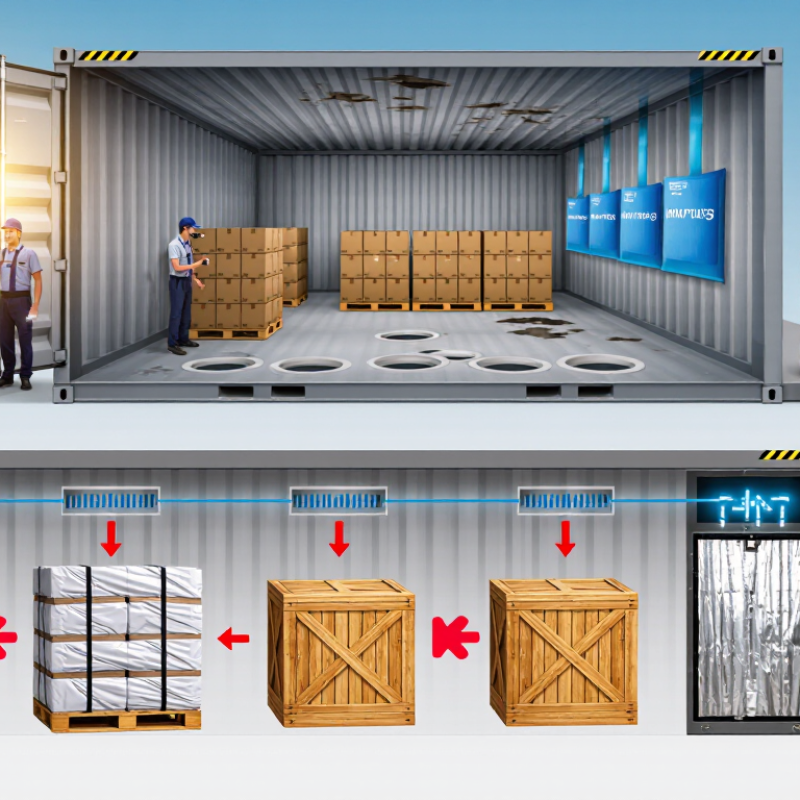
    How to Prevent Vapor Inside Shipping Containers?

    Understanding Why Vapor Forms Inside Shipping Containers

    How to Prevent Vapor Inside Shipping Containers?

    Understanding Why Vapor Forms Inside Shipping Containers

    Vapor forms when warm, moist air meets a colder container surface. This creates condensation, often called container sweat. A sealed box can trap moisture from wooden pallets, cartons, cargo, and floor materials. Night cooling makes the roof and walls colder than the air inside. Water then appears on ceilings, doors, and metal corners.

    The World Meteorological Organization reports that air can hold about 7% more water vapor for every 1°C temperature increase. This matters during ocean voyages, where containers can pass through several climate zones. The 2024 UNCTAD Review of Maritime Transport states that ships carry over 80% of world merchandise trade by volume. Many cargoes therefore face repeated temperature changes. The CTU Code identifies condensation as a major cargo-care risk. In practice, moisture calculations are often skipped. That shortcut can be expensive.

    Tips: Measure cargo moisture before loading. Check the container roof, floor, and door seals. Use moisture absorbers only after reducing the moisture source. Leave air circulation around cartons. Do not pack warm cargo immediately after rain or washing. Record temperature and relative humidity at loading. A dew-point meter gives better evidence than a visual check. IICL guidance also supports inspecting container cleanliness and dryness before use. Ventilation may help, but opening doors in humid weather can increase moisture. This detail is easy to overlook.

    Controlling Moisture Before Packing Cargo

    Moisture control begins before cargo enters the container. A clean floor does not guarantee a dry loading space. Inspect the roof, doors, seams, and wooden floor for leaks, condensation, or damp patches. Use a moisture meter on pallets, crates, and absorbent packaging. Dry cargo matters.

    Cargo should be packed only after it reaches a stable moisture condition. Warm goods placed into a cooler container can release vapor as temperatures fall. This creates condensation on the roof, walls, and cargo surfaces. Allow recently manufactured, washed, or outdoor-stored goods to dry fully. Do not rely on ventilation alone. It may introduce humid air during wet weather.

    The loading team should check the weather, container temperature, and cargo temperature before sealing. Keep cartons away from walls and leave small air channels between tight stacks. Place suitable moisture absorbers according to the cargo volume and expected transit conditions. They cannot rescue wet products. That assumption causes preventable damage.

    A rushed inspection can look complete and still miss trapped moisture beneath pallets. Recheck packaging corners, floor contact points, and the underside of cargo. Record the inspection time, readings, and visible conditions. These details support better decisions when conditions change during transport. Perfect control is difficult, but careless preparation is avoidable.

    Improving Airflow and Using Moisture Absorbers

    How to Prevent Vapor Inside Shipping Containers?

    Warm, humid air can meet a cold container wall and form condensation. This “container sweat” may wet cartons, labels, timber, and metal surfaces. Keep air moving. Before loading, inspect the container after rain and confirm the floor, ceiling, and wall seams are dry. Remove standing water and repair obvious leaks before cargo enters.

    Airflow works best when cargo does not touch every surface. Leave narrow channels between pallets when practical. Keep ventilation openings clear, and use dry dunnage to create space beneath cartons. Do not pack goods tightly against the roof or sidewalls. A small gap can reduce stagnant pockets, although airflow alone cannot control severe humidity.

    Moisture absorbers add another layer of protection. Select their capacity according to container volume, cargo moisture, voyage length, and expected climate changes. Hang or place them where air can reach them, but keep them away from products and packaging. Never treat a few small sachets as a complete solution for a heavily loaded container. They may fill early. Use humidity indicators or data loggers when cargo is sensitive, and record the readings before closing the doors. A practical mistake is checking only the container exterior. The cargo surface may already feel dry while hidden moisture remains inside packaging. Inspecting the load, spacing, and absorber condition takes extra time, but skipping those checks creates uncertainty. Small details matter.

    How to Prevent Vapor Inside Shipping Containers?

    Improving airflow and using moisture absorbers can reduce the water-vapor load that causes container rain and cargo condensation. At 25°C, saturated air holds approximately 23.0 grams of water vapor per cubic meter. The chart shows the corresponding moisture content at different relative-humidity levels.

    Keep cargo dry, allow air to circulate around the load, and use moisture absorbers when ventilation is limited. Avoid sealing wet packaging or cargo, especially before temperature changes during transit.

    Choosing Proper Packaging and Container Liners

    Vapor inside a shipping container usually begins with warm, humid air and a sudden temperature drop. According to the ASHRAE Handbook—Fundamentals, air at 20°C can hold about 17.3 grams of water per cubic meter when saturated. At 5°C, it holds only about 6.8 grams. The excess moisture can settle on cargo, walls, and ceilings as condensation.

    Packaging and container liners should manage this moisture before loading. Use dry pallets, moisture-resistant cartons, and sealed inner bags where the product allows. For sensitive cargo, a multilayer vapor-barrier liner can reduce moisture exchange through the container walls. A liner should fit tightly, but it must not block necessary ventilation around the cargo. Place sufficient desiccant units inside the enclosed packaging, not loosely on wet flooring. The CTU Code also stresses that cargo and packing materials should be dry before stuffing.

    Do not treat a liner as a complete solution. It cannot correct wet timber, warm cargo, or poor air circulation. In practical loading checks, I would inspect carton corners, pallet undersides, and the container roof. These areas often reveal hidden moisture first. Relative humidity loggers can provide useful evidence, although one sensor may miss local condensation. That is a weakness worth considering. The World Meteorological Organization reports that humidity changes sharply with temperature, so loading during humid weather increases risk. Allow cargo to acclimatize when possible, and record packaging condition, container dryness, and desiccant placement before closing the doors.

    Inspecting and Maintaining Containers During Transit

    How to Prevent Vapor Inside Shipping Containers?

    Inspecting a container during transit starts before loading. I check the roof, door seals, floor, and corner posts for water marks, pinholes, or soft wood. A dry-looking floor can still hide absorbed moisture. The Container Handbook identifies temperature changes and cargo moisture as major causes of container sweat. Cold nights can turn warm air into droplets on the ceiling.

    Ventilation needs judgment. Open vents should remain clear, but ventilation alone cannot correct wet cargo or damp timber. The CTU Code recommends inspecting cargo, packaging, and the unit before packing. I record the container number, inspection time, weather, and visible defects. Photos help, though I once photographed the doors but missed a small roof dent. That mistake was avoidable.

    During transit, operators should review route forecasts and temperature swings. The World Shipping Council’s Containers Lost at Sea 2024 Update reported 576 containers lost in 2023. That figure reinforces the need for secure, documented handling at every transfer point. At terminals, staff can check seal condition, door alignment, standing water, and unusual odors. Desiccants may reduce condensation, but they are not a substitute for dry cargo and sound packaging. Inspection intervals should match the route risk. Long ocean passages deserve closer checks. Small details matter.

    How to Prevent Vapor Inside Shipping Containers? - Inspecting and Maintaining Containers During Transit

    Inspection Stage Data Dimension Recommended Check or Target Why It Matters Corrective Action
    Before Loading Container interior dryness Interior should be visibly dry, clean, and free from standing water, wet residue, or condensation. Moisture already inside the container can become vapor during temperature changes and later condense on cargo or walls. Dry and clean the container; postpone loading until moisture sources are removed.
    Before Loading Roof, sidewalls, and door seals Check for pinholes, cracks, light penetration, damaged panels, and compressed or torn door gaskets. Water ingress and outside humid air can increase the container’s moisture load. Repair or reject the container if the structure or seals cannot provide weather protection.
    Before Loading Floor condition Inspect for dampness, odor, damaged boards, untreated stains, and trapped water beneath pallets. Wooden flooring can retain moisture and release it into the enclosed air during transit. Allow the floor to dry fully and replace damaged or persistently damp flooring when necessary.
    Before Loading Cargo moisture condition Load only dry cargo and packaging; verify moisture-sensitive materials against their applicable product specification. Wet cargo, green timber, damp cartons, and humid packaging are common sources of water vapor. Quarantine wet materials, improve pre-shipment drying, or use packaging designed for the product.
    Loading Air circulation and load spacing Avoid blocking container vents; leave practical air gaps between cargo, walls, doors, and roof where the cargo plan permits. Restricted air movement creates cold spots where condensation is more likely to form. Reconfigure pallets or blocking so ventilation paths and drainage routes remain clear.
    Loading Desiccant placement Select the quantity and type according to container volume, cargo moisture, packaging, voyage duration, and expected climate. Desiccants reduce available water vapor but cannot compensate for wet cargo or leaks. Use securely attached units in locations with airflow; do not place them where leakage could contact cargo.
    Loading Barrier and wrapping materials Use vapor barriers, liners, anti-condensation sheets, or breathable covers only when compatible with the cargo and packing method. Correctly selected barriers limit moisture transfer and reduce direct contact with condensation droplets. Confirm material suitability; avoid sealing wet cargo inside an impermeable wrap.
    During Transit Temperature and relative humidity Use data loggers when cargo is moisture-sensitive; record temperature and relative humidity at suitable intervals throughout the journey. Temperature swings can move the internal air toward its dew point and reveal condensation risk. Review trends, identify high-risk route segments, and revise packaging or loading controls for future shipments.
    During Transit Exposure to temperature changes Pay particular attention to transitions between hot and cold climates, day and night cycles, and vessel or terminal dwell time. Repeated thermal cycling can cause “container rain” on the ceiling and walls. Strengthen moisture controls before known climate transitions and minimize unnecessary door opening.
    At Transfer or Inspection Visible condensation and odor Check the ceiling, upper sidewalls, cargo surfaces, packaging, and floor for droplets, damp marks, mold odor, or corrosion. Early detection helps prevent moisture damage from spreading or remaining unnoticed until delivery. Photograph findings, isolate affected cargo, notify responsible parties, and arrange a documented assessment.
    At Delivery Seal and door-opening record Verify seal information and document every authorized opening, including time, location, and observed condition. A complete record supports root-cause analysis when moisture damage is discovered. Reconcile records with transport documents and preserve evidence before unloading damaged cargo.
    After Unloading Post-trip container maintenance Remove packaging waste, clean residues, dry the interior, and leave doors open only in a secure, dry environment. Routine cleaning and drying prevent residual moisture from affecting the next shipment. Record defects, complete repairs, and release the container only after it passes the next pre-loading inspection.
    Key control principle: Keep the container and cargo dry, prevent outside water entry, maintain reasonable airflow, and monitor temperature and humidity when the shipment is moisture-sensitive.