
PARTS
Pod Parts (18)
View Sub-Category
Replacement Glass (19)
View Sub-CategoryPARTS
Choosing a beginner vape kit
Vape Starter Kits, in Minnesota and Beyond
The best eCig, Box Mods and Vape Starter kits are just around the corner, or a short ship time away. If you are looking to purchase the best beginner vape kit for your dollar.Things often included in beginner vape kits, you might want to watch for.
- Battery, or multiple batteries.
- Clearomizer tanks
- Replacement Coils
- USB Charging Cable
- AC Power Adapter
- Free bottle of juice, or multiple
- Blunt Needle tips
The key is to find the right balance between value and price.
Of course you don't want to skimp, and have to re-buy a kit, but you do always have the opportunity to buy a more premium kit if you find you've graduated from past vape set-up. Things to think about as you choose, are whether the system will work other systems. - Some threading is specific to the brand and won't work with other devices, when you're looking at reviews check the source and make sure to weigh several reviews against each other and make an educated decision. Thanks for making Ecig Market your choice for Beginner Vape Kits in Brooklyn Center, Minnesota.7 Tips for Buying Magnetic Sunglasses
Buying Magnetic Sunglasses can seem simple until a clip shifts, a magnet weakens, or bright glare returns through a poor lens. This guide introduces seven practical tips for choosing a safer, more comfortable pair. It focuses on fit, lens quality, magnetic strength, UV protection, polarization, durability, and everyday convenience. Small details matter. A clip that sits two millimeters off-center may distort your view or look awkward in photographs.
Optometrist Dr. Gary Heiting, OD, offers an important principle: “Polarization reduces glare; it does not replace UV protection.” That distinction deserves attention. Polarized lenses can make a wet road look calmer, but they do not automatically protect your eyes from ultraviolet radiation. Check for clear UVA and UVB protection claims from a trustworthy manufacturer. Also inspect the frame connection. The magnets should align smoothly without forcing the clip into place. Test them while walking, turning your head, and adjusting the frame.
Perfect products are rare. Even a well-reviewed pair may feel heavy on a narrow nose. Some clips may collect dust around the magnetic points. That is worth admitting. Your face shape, prescription needs, and daily routine may change the best choice. Look closely at hinge quality, lens color, storage protection, and return policies. A cheap option can work. Sometimes it does not. These seven tips will help you compare real-world performance instead of trusting shiny packaging alone.
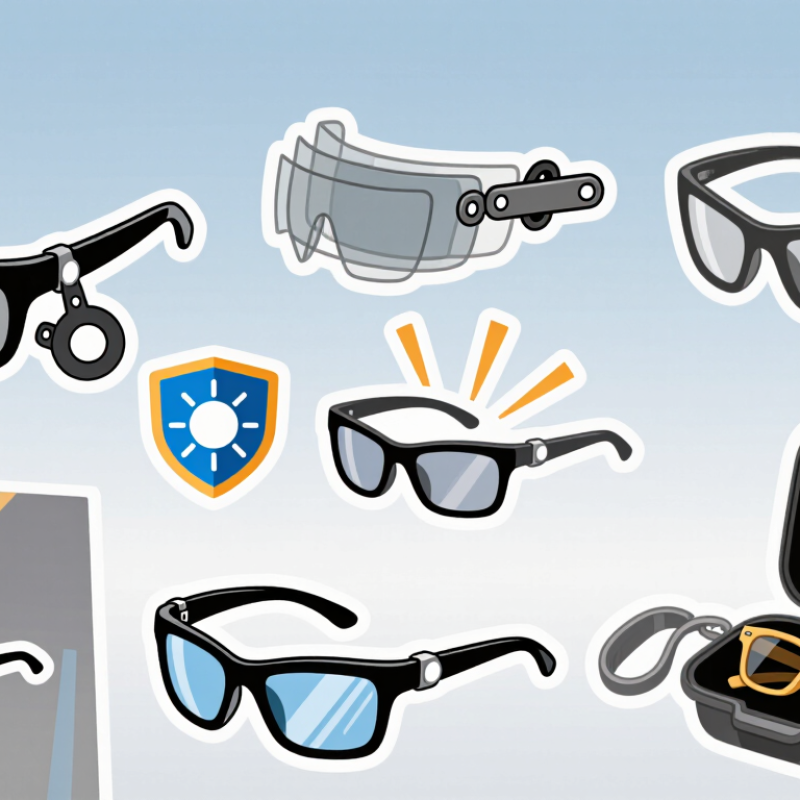
Set the Safety Baseline: UV400 Coverage Reaches 400 nm (ISO 12312-1)
When buying magnetic sunglasses, set UV protection as the safety baseline. UV400 means the lenses should block ultraviolet radiation through wavelengths up to 400 nanometers. This includes UVA and UVB exposure that can reach your eyes on bright days. Do not confuse dark lenses with protection. Darkness alone may reduce comfort while leaving harmful ultraviolet light uncontrolled.
Check the product description for clear UV400 wording and evidence of testing. ISO 12312-1 is a useful reference for general-purpose sunglasses, but an ISO mention should be supported by readable compliance information. Polarization can reduce reflected glare from roads, water, and glass. It does not automatically confirm UV protection. Ask whether the magnetic front lens has the same protection as the main frame. That small detail is easy to miss.
Inspect the attachment closely. The overlay should sit evenly, without gaps that admit strong side light. Hold each lens toward a straight window frame and look for bending lines or visible distortion. Try the glasses while turning your head; loose magnets can shift during walking. A claim alone is not proof. I would once have accepted attractive packaging too quickly, but that shortcut feels careless now. Independent testing is stronger than vague wording, and imperfect product pages deserve extra questions before purchase.

Select Lens Darkness: Category 3 Transmits 8–18% of Visible Light
When buying magnetic sunglasses, examine the lens category before admiring the frame.
Category 3 lenses transmit 8–18% of visible light, making them suitable for bright beaches, open roads, and snow-covered paths. They reduce glare and squinting without creating the dim effect of darker specialty lenses. That matters.
Lens darkness is not the same as ultraviolet protection. Confirm that the magnetic lenses provide full UVA and UVB protection through clear product specifications or testing information. A dark lens without proper UV filtering can feel comfortable while offering misleading security. Check twice.
Also inspect the attachment system. Magnets should align evenly, sit firmly, and release without bending the frame. A loose overlay can shift when you look down or walk in wind.
Try the glasses outdoors, not only under shop lighting. Notice whether pavement details remain visible and whether the lenses create distracting color changes. Category 3 may feel too dark in shaded streets, indoor spaces, or low-light conditions. Do not use them as a substitute for clear driving lenses after sunset.
I once underestimated how much a cloudy winter road could brighten suddenly; the right darkness improved comfort, but the fit still needed adjustment. That small imperfection is worth remembering.
Lens category, optical clarity, UV performance, and magnetic stability should be judged together, not separately.
Separate Polarization from UV Safety: Glare Control Is Not UV Blocking
7 Tips for Buying Magnetic Sunglasses
Magnetic sunglasses often promise sharper vision, but polarization and UV protection serve different purposes. Polarization reduces reflected glare from roads, water, and glass. It does not automatically block ultraviolet radiation. The World Health Organization estimates that up to 20% of cataract cases may result from UV exposure. That risk makes lens labeling more important than a dark tint.
Check for UV400 protection or documented blocking through 400 nanometers. Polarization should appear as a separate specification. A polarized lens can feel comfortable while offering poor UV protection. It happens. The American National Standards Institute’s Z80.3 standard provides recognized performance guidance for nonprescription sunglasses, including optical and UV-related requirements. Ask the seller for test information, not just a printed claim. Reliable documentation matters.
Magnetic attachment systems also deserve a practical inspection. The overlay should sit evenly, without gaps that let bright light enter from the sides. Try the glasses near a window or parked car. Glare should soften without making details look distorted. I once trusted a very dark lens because it felt protective. That assumption was wrong. Darkness reduces visible brightness, not necessarily invisible UV exposure. If the base glasses lack verified UV protection, the magnetic piece should not be treated as a safety upgrade. Consider an eye-care professional when labels are unclear, especially after long outdoor exposure.
Polarization reduces reflected glare by filtering horizontally oriented light, but polarization alone does not verify ultraviolet protection. A UV400 specification indicates protection against ultraviolet wavelengths up to 400 nm, covering UVA and UVB ranges. Always check the lens UV specification separately from its polarization feature.
Check Optical and Mechanical Quality Under ANSI Z80.3 and FDA Rules
7 Tips for Buying Magnetic Sunglasses
Magnetic sunglasses should be checked as optical devices, not just fashion accessories. Under ANSI Z80.3, lenses should provide acceptable clarity, uniformity, and impact performance. Hold the glasses at arm’s length and inspect a straight doorframe through each lens. If the line bends or shimmers, the lens may have optical distortion. Small flaws matter.
Look for clear information about UV protection and lens materials. FDA rules, including 21 CFR 801.410, address impact-resistant ophthalmic lenses, but the FDA does not approve every pair of sunglasses individually. Ask for current test information instead of trusting vague claims. A seller should identify the testing basis and explain whether the lenses meet applicable requirements. Documentation is more useful than a bold sticker.
The magnetic connection needs its own practical test. Attach and remove the front lens several times. It should align evenly, without scraping or shifting. Walk outdoors, turn your head, and check whether the attachment stays stable. Examine the bridge, hinges, magnets, and frame edges for looseness. I once focused too much on lens darkness and missed a weak connection. That was a poor buying habit. Very dark lenses can still have disappointing optical quality. Also check whether the overlay blocks the base lenses or leaves sharp, exposed edges. A careful inspection may feel excessive, but replacement costs and eye comfort make it worthwhile.
7 Tips for Buying Magnetic Sunglasses - Check Optical and Mechanical Quality Under ANSI Z80.3 and FDA Rules
| Tip | Quality Dimension | What to Check | Relevant Standard or Rule | Acceptable Indicators | Warning Signs |
|---|---|---|---|---|---|
| 1 | Verify UV protection | Look for a clear statement that the lenses block 100% of UVA and UVB radiation, or provide tested ultraviolet transmittance results. | UV performance is addressed in recognized sunglass performance standards, including ANSI Z80.3. FDA labeling and safety requirements still apply where applicable. | Specific UV-transmittance information supported by test documentation. | Only a vague “UV style” claim, no test information, or a dark tint without UV protection. |
| 2 | Check optical power and prism | View a straight vertical line through each lens, then move the glasses slightly. The line should not appear to jump, bend, or swim. | ANSI Z80.3 includes optical performance requirements such as refractive power, astigmatic error, and prism imbalance for applicable nonprescription eyewear. | Clear, stable vision with no noticeable distortion or eye strain during normal viewing. | Wavy images, double vision, headaches, or obvious differences between the right and left lenses. |
| 3 | Inspect lens material and impact resistance | Confirm the lens material is identified and ask whether the finished lenses passed the applicable impact-resistance test. | FDA impact-resistant lens requirements are established in 21 CFR 801.410; ANSI Z80.3 also contains performance provisions for applicable eyewear. | Documented testing, intact lenses, and secure lenses that remain seated after ordinary handling. | Cracks, chips, sharp edges, loose lenses, or marketing language that implies impact resistance without supporting information. |
| 4 | Evaluate tint, transmittance, and glare control | Check whether the lens category or visible-light-transmittance information is provided, especially for driving or bright outdoor use. | ANSI Z80.3 addresses luminous transmittance and related sunglass performance characteristics. Tint darkness alone does not prove UV protection. | Even tint across both lenses, readable safety information, and a use category appropriate for the intended activity. | Uneven tint, excessive darkness for driving, strong reflections, or no information about intended use. |
| 5 | Test magnetic attachment strength | Attach and remove the sun lens several times. Gently shake and flex the frame to confirm that the attachment stays aligned without excessive force. | Magnetic attachment is a design feature; it does not replace applicable optical, impact, labeling, or general product-safety requirements. | Consistent alignment, firm retention, smooth removal, and no movement during walking or normal activity. | The overlay slides sideways, detaches with light contact, interferes with blinking, or leaves exposed sharp magnetic hardware. |
| 6 | Inspect frame and hinge durability | Open and close the temples repeatedly, check hinge smoothness, and inspect the bridge, rim, nose pads, clips, and attachment points. | Mechanical construction should support the applicable durability and impact-safety performance claimed for the finished eyewear. | Symmetrical frame, secure screws, flexible but stable temples, and no rattling or deformation. | Loose hinges, uneven rims, brittle plastic, exposed burrs, or a clip that bends the prescription frame. |
| 7 | Review labeling, fit, and compliance evidence | Check the intended use, care instructions, importer or manufacturer contact information, warnings, return policy, and available test records. | FDA-regulated eyewear must meet applicable requirements; ANSI Z80.3 is a voluntary consensus standard unless incorporated into a specific requirement or claim. | Traceable product information, understandable instructions, comfortable fit, and documentation identifying the tests performed. | “FDA approved” used as an unsupported sales slogan, missing safety information, no traceable contact details, or a poor-fitting frame. |
Note: ANSI Z80.3 is a voluntary consensus standard. FDA requirements and applicable regulations should be checked for the specific product type, intended use, and market.
Confirm Fit, Magnetic Retention, Compatibility, Warranty, and Care
Buying magnetic sunglasses is less about appearance and more about reliable daily protection. The World Health Organization estimates that up to 20% of cataracts may result from ultraviolet exposure.
Tip 1: Confirm 100% UVA and UVB protection through clear product documentation.
Tip 2: Check the fit at the bridge, temples, and cheeks. The frame should stay stable when you look down.
Tip 3: Test magnetic retention with a gentle sideways movement. It should not detach during walking, cycling, or normal head movement.
Tip 4: Confirm compatibility with your prescription frame. Measure lens width and bridge size, rather than trusting a “universal” claim.
Tip 5: Inspect the attachment points closely. Uneven magnets or a loose clip can create gaps and annoying reflections.
Tip 6: Read the warranty terms before purchasing. The Vision Council’s consumer research continues to identify durability and product value as important eyewear considerations. Coverage should clearly address broken magnets, coating defects, and replacement periods. Short warranties deserve caution.
Tip 7: Follow a simple care routine. Rinse dust away, use clean water, and dry the lenses with a microfiber cloth. Never wipe dry grit across the surface. I learned this the hard way. Compatibility can still fail after careful measuring, especially with curved frames. A return window matters. Also, magnetic strength is not a substitute for a secure physical fit; both need checking in real use.

